The Mark on the Batten: What a Roofing Batten Is Actually Promising
Photo: Roberts, H. Armstrong (Howard Armstrong), 1885-1947, No restrictions, via Wikimedia Commons
A batten is a scrap of timber with a job to do. On a roof, that job is to hold the tiles or slates at the right gauge, at the right spacing, for decades. The difference between a batten that does that and one that doesn't is usually not visible to the naked eye. It is in the stamp, the grade, the treatment and the way it has been stored.
That is why 'near enough' is such an expensive phrase on a roofing job. The batten is not the headline material. It is the thing the headline material is fixed to. If it is wrong, you don't find out on the day. You find out when the roof starts to sag, the fixings loosen, or the tile lines go out.
A batten is not a scrap with pretensions
Roofing battens are not just any 25 x 50mm timber. They are graded, marked and expected to meet a standard. In the UK, that standard is BS 5534, the code of practice for slating and tiling. If a batten is being sold for roofing, the bundle should carry a mark that says it complies. That mark is not decoration. It is the batten's paperwork.
The stamp should tell you the standard, the grade, and usually who graded it. You may see Grade A or Grade B, along with a grader's mark. If the stamp is missing, illegible, or only on the wrapper rather than the timber, ask why. A batten without a mark is a batten without a reference.
The stamp is the batten's side of the argument
When a roof fails, everyone looks at the tile, the fixing, the underlay, the ventilation. The batten is often the last thing checked and the first thing to blame. A proper stamp gives you a chain of responsibility. It says the timber has been graded to a known standard. It does not promise the batten is dry, well stored, or suitable for every situation. That is why the stamp is the start of the conversation, not the end.
At the yard, ask to see the bundle end, not just the sample board. A sample can be the best batten in the pack. The bundle is what you are buying. Check that the stamps are consistent, that the timber looks straight, and that the ends are not split or badly treated.
BS 5534: the line that matters
BS 5534 sets out the requirements for roofing battens, including grading and dimensions. It is not the same as a general structural timber grade like C16. A C16 stamp on a piece of CLS does not make it a roofing batten. It may be strong enough for some jobs, but it has not been graded for the specific demands of a roof.
This is where substitutions start. Someone has a stack of CLS left over, or a pallet of untreated lath, or a bundle of 'roofing batten' that is cheap because it is undersized. It looks close. It might even go on. But the roof is a system. The battens are spaced to a gauge, fixed to a substrate, and expected to carry load and resist movement. 'Close' is not a category in BS 5534.
Grade, moisture and treatment: the three questions
Grade is the first question. Is it graded to BS 5534, and what grade? If the answer is vague, walk away.
Moisture is the second. Battens should be dry enough not to shrink and split after they are fixed. Wet timber can dry out on the roof, but it can also move, cup, and loosen fixings. If the bundle is sodden, ask how it has been stored and whether it has been kept under cover. A quick check with a moisture meter is not a bad idea on a big order.
Treatment is the third. Roofing battens are usually treated, but 'treated' is not a single thing. Ask what treatment has been applied and what use class it is intended for. Check that cut ends are treated on site with a suitable end-grain preservative. A treated batten with untreated cuts is a weak point.
Counter battens are not tile battens
Counter battens and tile battens do different jobs. Tile battens run across the roof to carry the tiles. Counter battens run up the slope, creating a gap for drainage and ventilation behind the tile battens. They are part of the roof's breathing and water-shedding system.
Do not use tile battens as counter battens just because they are the same size. Counter battens may need different treatment, fixing and spacing. They also need to be fixed into something solid, not just into the underlay. If the design calls for counter battens, use them. The roof is not a place for improvisation with the drainage layer.
The near-enough substitutions that come back
Common substitutions include:
- Untreated lath or interior batten used outside its comfort zone.
- CLS or studwork timber passed off as roofing batten.
- Undersized battens that are 'near enough' to 25 x 50mm.
- Second-hand battens with old fixings and split ends.
- Battens stored on the ground, wet and dirty, then loaded straight onto the roof.
Each one saves a little money on the day. Each one can cost more later. A callback on a roof is not a cheap visit. It can mean scaffolding, tiles off, and a conversation with a customer who has already paid.
What to ask before the wagon is loaded
At the yard, ask:
- What standard and grade is stamped on the battens?
- Can I see the stamp on the actual bundle, not just the sample?
- What treatment has been applied, and what is it for?
- How has it been stored, and is it dry?
- What are the actual dimensions, not just the nominal size?
- Is this tile batten or counter batten, and is it fit for that use?
A good yard will answer these without fuss. A yard that shrugs is telling you something.
Spacing is part of the purchase
Batten spacing is not a guess. It comes from the tile or slate manufacturer, the pitch, the exposure, and the design. The old roof's spacing is not a specification. If you are re-roofing, check the gauge for the new covering. If you are buying battens, make sure the size and grade match the spacing and the load.
This is why the cheapest batten can be the most expensive. If it is undersized or undergraded, you may need to reduce spacing, add more battens, or accept a roof that does not meet the standard. The saving disappears before the first tile goes on.
The yard's half of the deal
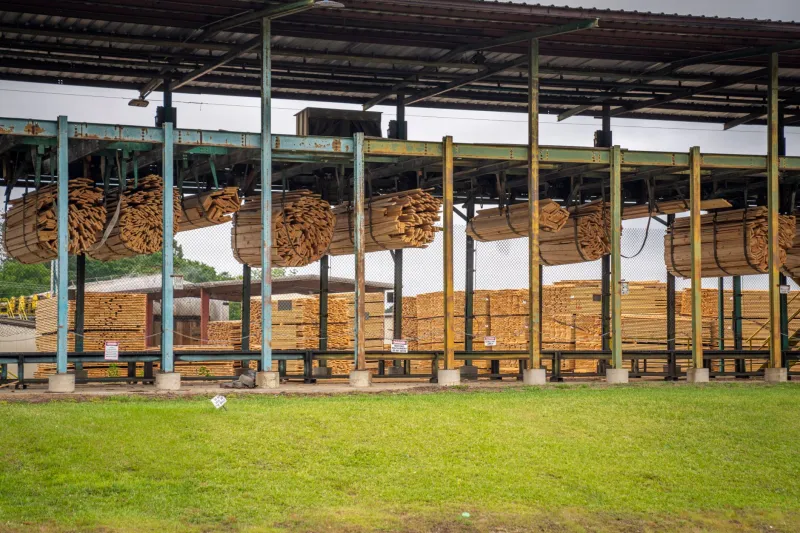
Storage matters. Battens should be kept flat, off the ground, under cover or at least well covered. They should not be picked up wet and loaded wet if they can dry first. They should not be dragged across the yard, splitting the ends. A good woodyard treats battens like what they are: part of the roof, not a pile of sticks.
When the wagon arrives, check the bundle. Look for the stamp, the condition, the ends, and the moisture. If something is wrong, say so before it goes on the roof. The batten is the cheapest thing up there. It is also the thing everything else depends on.