The Unglamorous Week: Letting Timber Settle Before Joinery
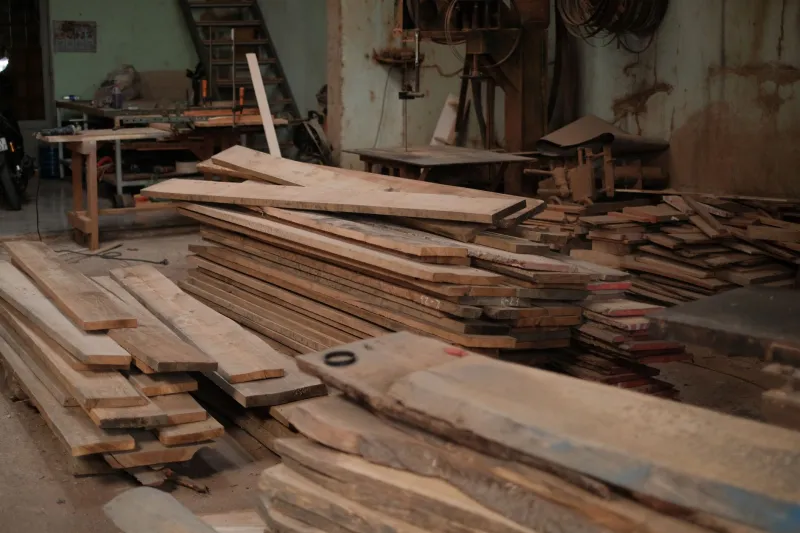
There is a moment, usually about ten minutes after the boards come off the van, when the temptation to start cutting is almost overwhelming. The timber looks straight, the job is waiting, and the saw is plugged in. But timber has a habit of making sensible people rush. The boards that looked flat in the yard can cup, shrink or twist once they are inside a heated UK home. Not because they were bad boards, but because they were not given time to settle.
Acclimatising timber is not a delay. It is part of the job.
What 'Straight Off the Rack' Really Means
A woodyard is a covered, airy place. It is not a front room in November. Boards may have been kiln-dried to a sensible moisture content, but they can still pick up moisture in storage, in transit or in a damp garage. A moisture meter might read 12% or 14% on a wet day. Your heated living room, with the radiator on and the windows shut, might be closer to 7% or 8% relative humidity in the air, and the timber will slowly give up moisture to match it.
That is when movement happens. Wood shrinks mostly across the width, not along the length. A wide board can lose a couple of millimetres across its face. That is enough to open a mitre, leave a gap in a floor, or make a drawer run tight. The meter gives you a number, but it does not tell you the whole story. The board has to reach equilibrium with the room it will live in.
Why a Heated Room Changes the Rules
Most UK homes are dry places in winter. Central heating, wood burners and double glazing all pull moisture out of the air. Timber responds by drying from the outside in. If one face dries faster than the other, the board cups. If the ends dry faster than the middle, you get splits. None of this is necessarily a defect. It is the timber doing what timber does.
The trouble is that joinery is unforgiving. A skirting board that shrinks after fitting leaves a gap at the mitre. A solid wood floor that dries too fast can cup or open at the joints. A door lining that moves after the plaster is finished can bind on the door. These are not disasters, but they are callbacks, and callbacks cost more than a week of patience.
Stacking: The Boring Bit That Does the Work
Acclimatising is mostly about air. The timber needs to sit in a level stack, off the floor, with space around every board. Use bearers or offcuts as stickers between the layers, spaced roughly 400mm to 600mm apart, and line them up vertically so the weight is carried down through the stack. Do not lean boards against a wall or lay them flat on concrete.
If the job is going into a house, bring the timber into the room where it will be fitted. That is the only way to test it against the conditions it will actually face. Keep the stack away from radiators, stoves, south-facing windows and damp walls. Remove the plastic wrapping so air can move, but keep the boards labelled if you have several lengths or species. A spare bedroom or a dry hallway is fine. A cold garage is not the same as a warm room, so a week in the garage does not count.
How Long Is Long Enough?
There is no single answer. A week is a useful default for most internal joinery, but it is not a law. Narrow beading and small mouldings settle quickly. Wide oak boards and thick worktop sections need longer. Solid wood flooring usually wants at least a week in the room, sometimes two, depending on the species and the build-up. Skirting, architraves and door linings are often fine after five to seven days. Furniture parts and built-in wardrobe panels benefit from a similar stretch.
The practical test is to check the moisture content over several days. When the readings level off and the boards are stable, they are ready. If you are bringing timber from a cold van into a warm house, give it a few days just to stop feeling cold and damp to the touch before you start measuring. And do not cut everything to size first and then stack the pieces. Acclimatise the boards, then cut.
Jobs That Punish You for Skipping the Wait
The jobs most at risk are the ones with wide boards, tight joints or visible movement. Solid wood flooring is top of the list, because a small amount of shrinkage across many boards adds up to visible gaps. Skirting and architraves with mitred corners are next, because a mitre that opens is impossible to ignore. Door linings and doors can bind or drop if the timber moves after fitting. Wide shelves, window seats and built-in cabinetry can cup if one face dries faster than the other. Any job that will be painted or varnished should be acclimatised first, because the finish locks in whatever shape the board has when you apply it.
Exterior projects are a little different. Fence posts, decking and cladding are outside in the weather anyway, so they do not need a week in a spare bedroom. But they still benefit from being stacked flat and spaced while you get organised, rather than being left in a twisted bundle on the drive.
The Yard Cannot Do This Bit for You
We can supply timber at the right moisture content, and we can check a batch before it leaves. What we cannot do is recreate your front room. A woodyard is not a heated house, and a board that sits in our rack is not acclimatising to your kitchen. That last step is yours. Tell us when the timber is going in and what it is for, and we can point you at the right stock. But do not skip the week because the yard said it was dry. Dry to us and dry to your radiator are two different things.
A Simple Pre-Cut Routine
Bring the timber in a few days before you plan to start. Remove the wrapping and stack it on bearers, with stickers between the layers. Space the boards so air can move, and keep the stack level. Leave it in the room where it will be fitted, away from direct heat. Check the moisture content after three days, then again the next day. When the readings are steady, start cutting. Seal or finish the timber promptly after fitting, especially end grain, because that is where moisture moves fastest.
It is not glamorous. It does not photograph well. But a week on the rack is the cheapest insurance you can buy for a timber job. Good boards deserve a breather before the saw comes out.