The Mileage Question: What a Board's Origin Really Tells You
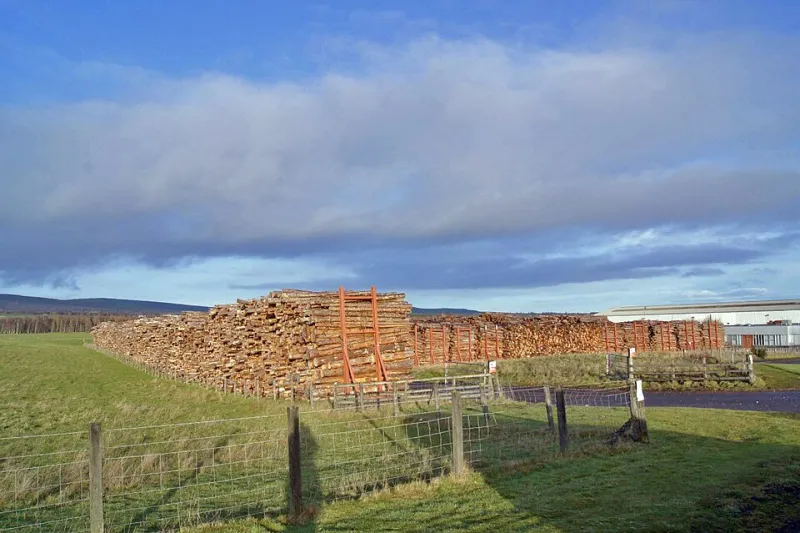
Photo: Richard Dorrell , CC BY-SA 2.0, via Wikimedia Commons
Walk into any yard and you will hear the same three words used to sell three completely different things: British grown, sustainably sourced, and local. They sound like answers. Most of the time they are questions wearing a coat.
Origin does matter. It shapes how a board moves, how it dries, how long it lasts and how much you pay. But it matters in ways that have almost nothing to do with the flag on the label, and a lot to do with growth rate, seasoning and how the timber has been looked after since it was sawn. So let us take the three buckets properly.
First, ask what local is supposed to mean
There are at least four things a supplier might mean, and they are not the same claim.
Grown here: the tree was felled in the UK. Sawn here: the log might have come off a ship from the Baltic and been milled in Scotland. Dried here: same story, different kiln. Delivered from a yard near you: nothing to do with the tree at all, just the lorry journey.
If the origin genuinely matters to your project, ask three plain questions. Where was it felled, where was it sawn, and where was it dried? A supplier who knows their stock will answer without flinching. One who does not will change the subject to price, which is also information.
The homegrown cast
Larch is the great British success story and the great British compromise. It grows fast here, which means wide rings, plenty of movement and a lot of knots. It is lovely for cladding, shed walls, fence rails and anything with a bit of rustic character, and it takes a finish well. It is not Siberian larch, though, and the heartwood is not in the same league for durability at ground level.
Douglas fir grown in the UK is a proper structural timber with good strength and a warm colour, and it is often sold wet. That is fine if you are building a frame and letting it dry in place, less fine if you want a crisp finished surface.
Oak is the one everyone asks for. British oak has real character, more figure and more variation than much of what arrives from the continent, and it moves. It moves a lot. If you are building with green oak, the movement is part of the design. If you are making furniture or a worktop, you want it properly kiln dried and you want to allow for it. It will also stain steel fixings black given half a chance, so stainless or galvanised, always.
Sweet chestnut is the quiet hero of the homegrown list. Coppiced for centuries, durable in the ground, superb cleft for fencing and rural work. Availability comes and goes, but it is one of the few homegrown species that genuinely shrugs off British weather.
Scots pine and homegrown spruce fill out the treated category. If your job is a fence, a shed base or a bit of landscaping, this is the sensible, affordable answer, and the treatment matters far more than the postcode it was grown in.
What the imports bring
Nordic redwood, slow grown with tight rings, is the workhorse of UK joinery for a reason. It is calmer, straighter and more predictable than fast-grown homegrown softwood, and it holds a machined profile beautifully. It has also become the timber most exposed to price swings and supply wobbles, so what is on the rack this month may not be on it next.
Siberian larch earns its reputation for durability, and earns its air miles too. European oak from France and Germany tends to be cleaner and straighter than British, at the cost of some of the character. Tropical hardwoods are a durability shortcut, but they come with provenance questions that deserve a straight answer in writing, not a nod.
The point is not that imported is bad. It is that imported is not automatically better or worse, it is just differently grown, and differently grown means differently behaved.
Reclaimed: the honest trade-off
Reclaimed timber is usually old growth and often dense, stable and full of character that money cannot buy new. It is also full of nails, grit, old paint and history, and your planer knives will find all of it.
Buy reclaimed because you want the look, the age or the story, not because you assume it is cheaper. Per cubic metre it can look like a bargain; per finished board, after you have de-nailed it, cut around the defects and lost a third of it to the waste pile, it usually is not. Check for lead paint on anything pre-1970s, and be sceptical of reclaimed timber that has spent decades soaked in preservative.
Movement is where origin shows up in real life
The single most useful thing origin tells you is how much the timber will move once it is in your building. Fast-grown homegrown softwood and British oak move more than slow-grown Nordic stock. That is not a defect, it is a design input. Allow bigger gaps, use movement-friendly fixings, keep boards off the ground and let timber acclimatise on site before you fix it.
And note this: seasoning beats nationality every time. A properly kiln-dried British oak board is far more predictable than an imported board that has been sitting damp in a container. You cannot tell either of those things from a label, which is why the questions matter more than the flag.
The sustainability bit, said plainly
Shipping distance is only one part of the picture, and often a smaller part than people assume. UK forests are generally managed to UKWAS standards, and FSC or PEFC chain of custody is your best evidence that a claim has been checked by somebody other than the sales team. Ask for the certificate number and, if you are buying volume, check it.
There is also a durability argument in the carbon maths. A shorter journey for a timber that fails in eight years may not beat a longer journey for one that lasts thirty. Reclaimed is usually the lowest-impact option available, right up until the moment you need a specific section and it is not there.
A plain way to choose
- Structural work: buy graded, buy dry, worry about origin second.
- Cladding and fencing: British larch or sweet chestnut if you can get the lengths, Siberian if you need the durability.
- Joinery and furniture: slow-grown Nordic redwood or European oak, properly dried.
- Heritage and character: reclaimed, or British oak if you have the budget and the patience.
- Volume on a budget: whatever is in the yard, graded and reasonably dry.
Origin is a starting point, not a verdict. A well-seasoned, straight board of the wrong nationality will serve you better than a badly stored one with a lovely story. Ask the three questions, look at the board in front of you, and let the timber make its own case.