The Wet Line: Why UK Fence Posts Fail at Ground Level

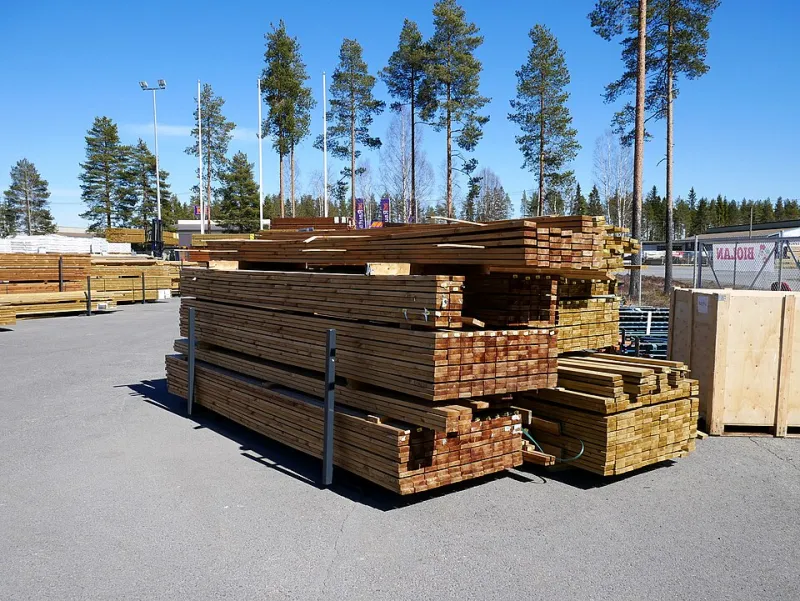
Photo: Mick Lobb , CC BY-SA 2.0, via Wikimedia Commons
A fence post rarely fails in a dramatic way. There is no warning creak, no cartoon crack. One windy Tuesday the panel leans, you push it, and the base of the post crumbles like a biscuit left in the sink. The rest of the post can look perfectly sound. The damage is nearly always at the ground line.
That is the bit worth understanding before you buy another post. A fence is only as good as the timber that disappears into the soil, and too many posts sold as heavy duty are not built for that job.
The wet line is the enemy
The ground line is not a neat boundary. It is a zone maybe 100mm either side of the soil, where rain splashes, soil stays damp, air gets in and out, and soil organisms get to work. Timber likes to be either properly dry or permanently wet. What it does not like is repeated wetting and drying. That cycle at the base of a post is what opens up cracks, leaches out treatment and lets rot in.
Most posts snap just above the soil, not below it. That is where water sits after a shower, where grass and mulch hold moisture, and where the post is warm enough in summer for fungal decay to get going. A post can be solid from the top down to ankle height and still be useless.
Treatment is a specification, not an adjective
Ground contact is the key phrase. In the UK, timber treatment is graded by use class. For a post set in soil, you want a product specified for ground contact, normally Use Class 4. A post marked for exterior use above ground, such as Use Class 3, may be fine for a shed wall or a fence rail but it is not the right choice for a post buried in wet clay.
Pressure treatment forces preservative into the timber under vacuum and pressure. Dip treatment wets the outside. A dipped post can look dark and smell strong, but the centre is still dinner for fungi. If the label does not say pressure treated and give a use class, do not assume.
Species matters too. Pine is the common UK fencing post and, when properly incised and pressure treated, it can do a decent job. Larch, Douglas fir and home-grown hardwoods such as oak or sweet chestnut have different durability, but sapwood is sapwood. A thick oak post with a lot of pale sapwood is not automatically a fifty-year post. Heartwood is the durable part; sapwood needs treatment or it needs keeping dry.
Heavy duty can just mean heavy
Heavy duty is not a legal standard. It often means thick. A 100mm square post feels reassuring in the hand, but if it is only surface treated and set in a wet corner, it will fail before a smaller post that has been properly pressure treated for ground contact. Weight is not a warranty.
The small details that shorten life
Cut ends are the weak spot. End grain drinks water like a bunch of straws. If a post is cut on site and the cut is left bare, that is an open door. Ask for end-grain preservative and use it, especially on the top cut and any notch. A chamfer on the top helps shed water, but it is not a substitute for treatment.
Concrete can help hold a post steady, but it can also create a collar that holds water against the timber. A poorly finished concrete lump that sits above the soil and traps rain is worse than a clean gravel base with drainage. The same goes for piling soil or mulch up around the post. Keep the base clear.
Fixings matter as well. Cheap galvanised nails and brackets can corrode faster in treated timber. For outside work, use fixings specified for the job, usually stainless steel or hot-dip galvanised.
Questions for the yard
Before you pay, ask:
- What use class is this post rated for?
- Is it pressure treated or dip treated?
- Has the timber been incised to help penetration?
- What does the warranty exclude?
- What should I do with cut ends and notches?
- Are the fixings suitable for treated timber?
A good yard should answer without reaching for a brochure. If the answer is it is all treated, mate, that is not an answer.
Buy for the buried bit
Fence posts are one of those products where the invisible specification matters more than the showroom finish. The bit you see is the bit that lasts. The bit in the ground is the bit that decides. Spend your money on ground-contact treatment, decent drainage and protected end grain before you spend it on extra thickness.
Then, when the next winter blows through, the fence will still be standing and you can get on with something more interesting than digging out a rotten stump.