What Does Treated Timber Actually Mean? Reading Labels Without the Guesswork
Treated timber is one of the vaguest phrases in the UK building trade. It can mean a board that has been properly pressure treated for ground contact and will last for decades. It can also mean a length of batten that has been dipped in preservative for a few seconds and is about as protected as a paper hat in a rainstorm. The label on the shelf rarely tells you which one you are buying.
This is not a rant about treatment. It is a guide to reading past the adjectives.
Start with the use class, not the word treated
Use classes are the closest thing to a proper specification. They describe where the timber can be used:
- Use Class 1: internal, dry
- Use Class 2: internal, occasional damp
- Use Class 3: exterior, above ground
- Use Class 4: ground contact or fresh water
- Use Class 5: marine or very wet conditions
For a typical UK garden, fence posts and deck joists in the ground need Use Class 4. Fence rails, shed cladding and deck boards above ground are usually Use Class 3. A batten in a dry loft is not the same product as a post in wet clay. If the label does not give a use class, treat it as unknown. Unknown is not a specification.
Pressure treatment and dip treatment are not cousins
Pressure treatment uses a vacuum and pressure cycle to push preservative into the timber. Dip treatment coats the surface. Both can make timber look dark and smell of chemicals. Only one is designed to protect the inside of a post in the ground.
A dip-treated board can be fine for a temporary job or a sheltered internal use. It is not the right choice for a post set in soil. If a seller says it is treated and cannot say how, ask again. Tanalised is often used as shorthand for pressure-treated timber, but it is still worth checking the use class. A tanalised label does not automatically mean ground contact.
End grain is where the water gets in
Even good pressure treatment does not make cut ends invincible. When you saw a post or drill a fixing hole, you expose fresh timber. That end grain needs a brush-on treatment made for cut ends. This is especially important on the top of posts, the bottom of posts and anywhere you have notched a rail in.
The same goes for fixings. Treated timber can be more corrosive to cheap metal than untreated timber. Use stainless steel or hot-dip galvanised fixings for exterior work. Electro-plated screws that look shiny in a tub are not the right choice for a deck or fence that will be wet for half the year.
Heavy duty, long life and other marketing words
Heavy duty, premium, long life and extra durable are not regulated terms. They might describe a genuinely good product. They might describe a thick lump of poorly treated pine. The only way to tell is to look for the specification behind the adjective: use class, treatment type, species and warranty conditions.
Warranties are worth reading, not just admiring. Many require the timber to be installed in a certain way, with cut ends treated and fixings of a certain grade. A fifty-year warranty that is voided by a cut end is not a fifty-year warranty in practice.
The quick questions to ask before you pay
Ask these at the counter or on the phone:
- What use class is this timber?
- Is it pressure treated or dip treated?
- Has it been incised to improve penetration?
- What do you recommend for cut ends and drilled holes?
- Which fixings should I use?
- What does the warranty exclude?
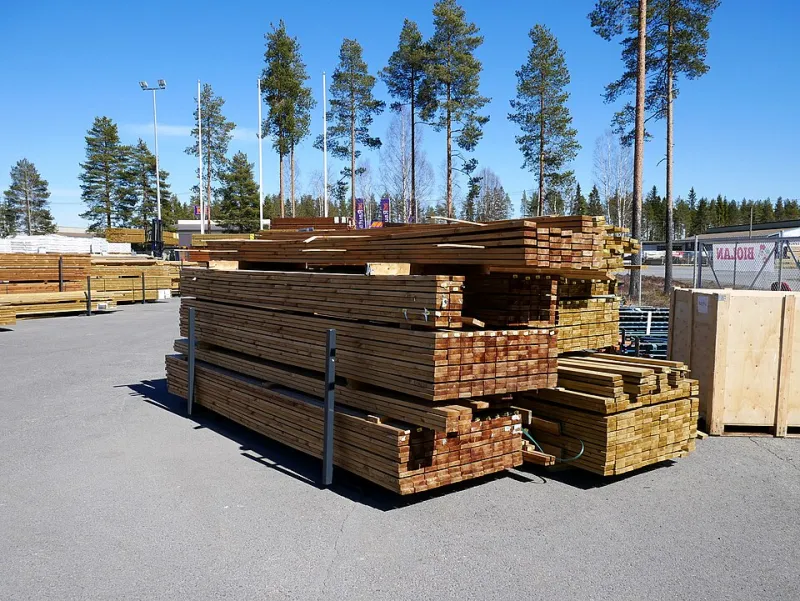
If the yard cannot answer, that tells you something. A good timber supplier should know what is on the rack and where it is safe to use.
Wet wood is not proof of treatment
A common mistake is to judge treatment by weight or colour. Wet timber is heavy. Dark timber looks treated. Neither is a specification. Nor is a strong smell. The treatment that matters is inside the timber, not on the surface.
Buy the label, not the adjective
The difference between a fence that lasts fifteen years and one that lasts five is often not the thickness of the post. It is the treatment specification, the end-grain protection and the drainage around it. Treated timber is a useful product when the label tells you what kind of treatment it is. When the label is vague, assume nothing and ask.
At Walsh Woodyard, the straight answer is the one we want to give: tell us what you are building, where it sits and how wet it gets, and we will point you at the right specification. If a product is not right for ground contact, it is better to know before it is in the ground.