The Back-Rack Bargains: How to Buy Shorts, Seconds and Offcuts Without Getting Stung
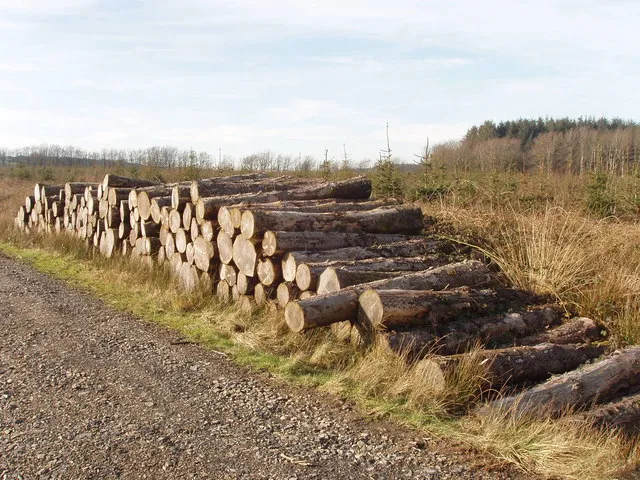
Photo: David Hawgood, CC BY-SA 2.0, via Wikimedia Commons
Every woodyard has a back rack. Sometimes it is a shelf, sometimes a pallet, sometimes just a corner where the odd lengths and downgraded boards end up. It is not rubbish. It is stock that does not fit the standard rack, and it is often where the best value is hiding. You just need to know what you are looking at.
First, learn the lingo
Shorts are full-section boards cut to shorter lengths. They are usually under 1.2m or 1.5m, but the exact cut-off varies by yard. A short is not automatically defective. It is simply too short for the main rack.
Seconds are boards downgraded for a defect: a loose knot, a split, waney edge, stain, resin pocket or a bit of checking. They are sold as seen, often at a discount. The section and species are usually the same as the clear-grade stock.
Offcuts are the leftovers from machining and cutting. They can be short shorts, mixed lengths, mixed species, or a bag of odds and ends. Quality varies enormously. Some yards sell them by the bag; others price them by volume or by the piece.
Shorts: the honest workhorses
Shorts are the easiest back-rack buy to get right. If you have a cutting list, you can measure them against it. They suit shelving, small furniture, drawer sides, jigs, crates, planters and workshop fixtures. They are also good for prototypes, where you do not want to cut into a long board.
Check the ends for splits and checking. A short board with a long split up one end may still give you the piece you need, but price it on the usable length, not the nominal length. Buy a little more than you think you need. Shorts are not always consistent, and a spare piece is cheaper than a second trip.
Seconds: read the defect, not the discount
Seconds are where the bargains and the false economies live side by side. The key question is not 'how cheap is it?' but 'where is the defect, and does it matter for my job?' A knot in the middle of a shelf is a problem. A knot near the end that will be cut off is not. A split along the edge of a board destined for a painted utility shelf may be fine. The same split in a structural beam is not.
Do not use seconds for load-bearing work, floor joists, roof rafters, stairs or anything that needs a guarantee. Do not use them for exposed joinery if you need a clean finish. Do use them for workshop furniture, shed shelving, garden planters, trellis, cold frames and rough utility work. Treated seconds can be fine for garden projects, but check the treatment and do not assume it is suitable for ground contact.
Offcuts: the small print
Offcuts are the most variable. Ask what they are: solid timber, sheet goods, treated or untreated, mixed species or one species. Look for nails, staples, paint and grit. A bag of offcuts from a joinery shop may be excellent; a bag of mixed site waste may be firewood.
They suit small turnings, spacers, jigs, repairs, kindling and small craft projects. They do not suit anything that needs a consistent section or a long clear length. If you are buying by the bag, empty it and sort it before you pay if the yard allows. If not, ask what is in it.
How to ask without sounding like a chancer
Be specific. 'Have you got any shorts in 4x2 at 900mm or longer?' is a good question. 'Have you got any cheap wood?' is not. Ask for seconds by species and section: 'Any 18mm redwood seconds?' Ask for offcuts by type: 'Do you sell bags of hardwood offcuts?'
Ask how the price works. Is it per piece, per bag, per cubic metre? Ask what is wrong with the seconds. Ask if you can sort through the rack. Most yards will say yes if you are buying a decent amount and you do not leave a mess. Build a relationship. Regulars get first look at the back rack, and that is not favouritism; it is just how small yards work.
Genuine bargain versus false economy
A genuine bargain has straight, sound timber, a defect outside your cutting list, a known species and a price clearly below clear grade. You can see the usable pieces without too much imagination. A false economy has hidden metal, rot, damp, excessive waste or sizes that do not fit. If you have to machine off 30 per cent of the board, the discount needs to reflect that. If you have to sort through fifty pieces to find ten, your time has a price too.
Projects that love the back rack
- Workshop shelving and jigs
- Garden planters and raised-bed liners, using suitable treated timber
- Crates, log-store slats and shed storage
- Small furniture and drawer sides
- Trellis, cold frames and garden obelisks
- Prototypes and one-off repairs
Projects that do not
- Structural beams, joists, rafters and stairs
- Load-bearing frames
- Exterior joinery where finish matters
- Decking that needs to last
- Anything requiring a long clear span or a warranty
A quick checklist before you pay
- Know your cutting list.
- Ask for species, grade and treatment.
- Check the ends and faces for splits, rot and loose knots.
- Look for metal, grit and old fixings.
- Measure the usable length, not the nominal length.
- Confirm the price unit: per piece, per bag or per cube.
- Buy enough for the job, plus a little spare.
- Store it properly when you get it home.
- If it looks too good to be true, ask why it is on the back rack.
The back rack rewards the prepared buyer. Turn up with a tape, a cutting list and a straight question, and you will come away with good timber at a fair price. Turn up hoping for a miracle, and you will come away with firewood.