Prod It Before You Pay the Haulier: Judging a Second-Hand Shed
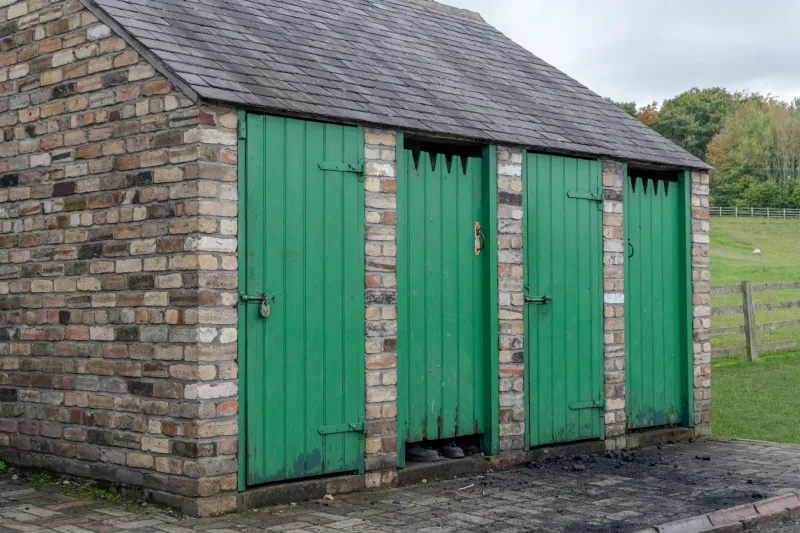
Every so often a shed comes up free to a good home. It has sat at the bottom of somebody's garden since the nineties, it looks broadly shed-shaped from the kitchen window, and the price is right. Then you ring a man with a flatbed and discover the real invoice arrives later, in dribs and drabs, in the form of new bearers, a sheet of OSB and a Saturday you'll never get back.
None of that means don't take it. It means go and look properly first, with a screwdriver in your pocket and no sentimental attachment to somebody else's joinery.
Get down on your knees, because that's where it's dying
Almost every failed garden shed in the UK fails within 150mm of the ground. The bottom rail of each panel, the corner posts, the bearers under the floor — that's the wet zone, where rain splashes back off slabs and where air doesn't move. It's also the zone nobody inspects, because inspecting it means kneeling in the wet.
Kneel in the wet.
Take a screwdriver or an awl and push it into the bottom rail at roughly 300mm intervals along all four sides. Sound timber resists, and the point leaves a small dent. Rotten timber swallows the tool, and it comes back out dark and damp with stringy fibres on it. If more than a short section is soft, you're not looking at a shed, you're looking at a cladding donor.
Wet rot is soft, dark and local. Dry rot is rarer in a ventilated shed but you'll know it — white cottony growth, orange-brown fruiting bodies, and a mushroom smell that shouldn't exist in a garden building. If you find that, walk away and don't take the timber home with you.
While you're down there, look at what the shed is standing on. Bare soil, a course of loose bricks or a single line of wobbly slabs means the bearers are almost certainly gone. A proper concrete base or a solid slab with treated bearers above it is a much better starting point.
The frame matters more than the boards
Feather edge cladding is the cheap, replaceable part. You can re-board a shed over a couple of weekends without much drama. The frame underneath is the bit that decides whether the whole thing is worth moving, so check the corner posts, the mid-rails and the top plate the same way you checked the bottom.
Pay attention to the joints as well as the timber. Splits running out from nails, fixings that have pulled proud, or a post that has visibly shrunk away from the panel it's bolted to — all of those say the same thing: this building has been working hard in the wet for a long time.
Then check whether it's square, because a racked shed is a miserable thing to transport and even worse to reassemble. Measure both diagonals across the floor. On a 3m shed, a difference of more than about 25mm between the two readings means it has moved, and it won't spring back because you asked nicely.
Look at the floor before you admire the roof
The floor is the most commonly overlooked part and the second most expensive to put right. Chipboard or thin OSB that has been damp for a decade turns to a fibrous mush you can push a thumb through, and the giveaway is often a spongy feel underfoot near the door where the rain gets in.
Lift a corner of any loose sheet, or shine a torch underneath if there's a gap. Replacement isn't a disaster — 18mm OSB3 runs to roughly £30–£45 a sheet depending on where you shop — but only if the bearers and the bottom rails underneath are sound. A rotten floor over rotten bearers is a rebuild, not a repair.
Ask how the floor is supported. Bearers that lift the deck clear of the ground are doing real work. A floor laid straight onto slabs is a sponge with ambition.
Roof: cheap to fix, or the last straw
Mineral felt has a working life of maybe ten to fifteen years before it starts cracking at the folds and along the eaves. A tired covering is not a dealbreaker — a small shed roof is a half-day job and perhaps £60–£100 in felt, adhesive and clout nails.
What you're checking is the deck beneath it. Sagging between rafters, soft spots underfoot on the roof, or daylight showing through means water has been getting in for a while. Be suspicious of a second layer of felt laid over the first, or of roof coverings weighed down with bricks and slabs. Both are the previous owner's way of postponing a decision you're about to inherit.
Doors, windows and fixings tell the truth
A door that has dropped, sticks at the top or won't close flush is telling you the frame has moved. That may just be settlement, or it may be the beginning of the racking you measured earlier.
Run your eye along the nail heads on the cladding. Rust streaks mean water has been sitting on those heads for years, and a screw that spins without gripping means the timber behind it has gone crumbly. Galvanised or sherardised fixings survive; bright steel in a damp shed doesn't.
Finally, work out whether it comes apart. Bolted corner sections mean a panelised shed that will dismantle and reassemble — good news. If the corners are held together with a hundred nails, it's coming apart in pieces regardless of your intentions, and it won't go back together the way it came.
The arithmetic that actually matters
A typical man-and-flatbed job within twenty miles runs £150–£350, more if a Hiab is needed. Add your time, a few lengths of bracing timber screwed across the corners so the panels don't fold on the A-road, and the base you'll need anyway.
Against that, a new 6x4 pressure-treated shed starts around £350–£600 delivered. So the sums are genuinely close, and they only tip towards the free shed when the frame is sound at the bottom, the floor is either good or cheaply replaceable, and the roof deck is intact.
If the sole plates are soft, the diagonals are out, or it's nailed together into a shape that won't survive a trailer, then the most valuable thing in that garden is the decent 3.6m boards on the sunny side, the hinges, and the glazing clips — salvage those and leave the rest where it stands. That's a woodyard's answer, and it's usually the honest one.