The Pen Is the Point of No Return: Checking a Timber Delivery Before You Sign

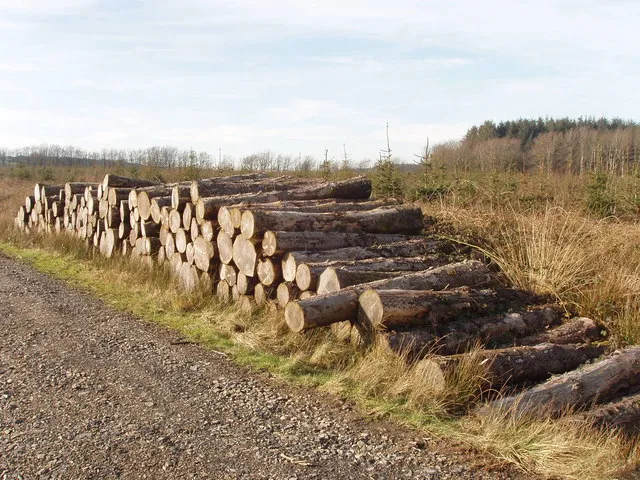
Photo: Lisa Jarvis, CC BY-SA 2.0, via Wikimedia Commons
The lorry backs in, the driver hops down with the delivery note flapping and a pen already uncapped, and behind you the kettle's just gone. It is very tempting to scribble and get on with the day. Do that, and you have quietly handed away most of your leverage on anything wrong with that load — the short bundles, the split ends, the treatment tags that do not say quite what you thought they said.
Ten minutes at the tailgate is cheaper than a fortnight of email. Here is how we would spend them.
The Delivery Note Is Not a Receipt — It Is a Contract
A receipt says money changed hands. A delivery note says you accepted what was on it. That is a meaningful difference, and it is why the small print matters more than the big print. Most merchant terms include a line about goods being signed for as received, and some go further and ask you to note damage or shortage at the point of delivery. Sign clean, and the argument later becomes a conversation about what might have happened to those boards after they left the yard, which is a conversation you will not win.
So treat the note as the contract it is. Read it before the pen comes out, not after.
Count the Bundles While They Are Still on the Lorry
It is far easier to count a load when it is stacked in one place than when it is spread across your drive, your front garden and half the garage. Match the number of bundles, packs and loose lengths against the note before anything gets moved somewhere convenient. A missing bundle spotted at the tailgate is a five-minute phone call. A missing bundle spotted on Thursday is a mystery.
Check lengths too, at least by eye. If you ordered 4.8 metre carcassing and the packs look suspiciously uniform at 4.2, that is worth stopping for. Someone has either picked the wrong rack or the note is wrong, and both are easier to fix now.
Walk the Load Rather Than Watching It Come Off
Stand where you can see the bundles as they land. You are looking for a handful of specific things:
- Fork damage. Tines through a pack leave crushed arrises, snapped banding and a dent you will find later when that board is the one you wanted for a visible face.
- Transit scuffing versus real damage. A rubbed corner is cosmetic. A split that runs a third of the way up a length is not, and neither is a bundle that has clearly been dropped on one end.
- Wet wrapping and stained stickers. Damp packing is not automatically a problem, but it tells you the load has been sitting somewhere it should not have been, and it invites blue stain on anything sap-bearing.
- Banding and strapping. Loose straps mean the pack has shifted in transit, which means the ends have been taking knocks.
- Treat tags. On treated timber, the tag stapled to the pack is your evidence of what you actually bought. Photograph it while it is still attached — tags have a habit of vanishing once the wrapping comes off.
Moisture and Treatment Deserve More Than a Glance
If you ordered kiln-dried carcassing, a quick check with a pin meter on two or three boards near the outside of the pack will tell you whether you are in the right postcode. You are not expecting a laboratory result on the drive; you are looking for an obvious outlier that suggests the pack has been stored badly.
On treated stock, read the tag rather than trusting the colour. Use class, treating process and the producer's name should all be legible. If you ordered UC4 for posts going in the ground and the tag says something else, that is exactly the sort of thing the delivery note exists to catch — but only if you catch it first.
Write on the Note, Politely but Specifically
Here is where people get shy, and it costs them. "Signed unexamined" is better than a clean signature, but it is nowhere near as strong as writing what you actually saw: two packs of 4.8m C16, ends split on four lengths; one pack banding broken; treatment tag illegible on pack 3. Ask the driver to countersign it. Most will, without any fuss — they would rather have it written down than argued about later.
You are not picking a fight. You are making a record. There is a difference, and drivers can tell.
Take Photographs That Would Stand Up Later
Four shots cover almost everything: a wide one of the whole load as delivered, a close-up of each problem area, a clear shot of the delivery note with the load in frame, and a close-up of any bundle label or treat tag. Most phones timestamp automatically, which is half the battle. Keep them somewhere you will still be able to find them in three weeks, because that is roughly when the email chain starts.
If You Have Already Signed, Ring the Same Day
It happens. If you have signed clean and then found a problem, ring the merchant the same afternoon, quote the order number and the delivery date, and send the photographs in one message. Do not move the timber, do not cut it, and do not distribute it around the site. Merchants are far more reasonable about a load that is still sitting there in its original state than about one that has been half-used and is now a matter of opinion.
The Habit Worth Keeping
None of this takes long. Count the bundles, walk the load, read the tags, write down what you see, take four photographs. It is ten minutes, and it is the cheapest insurance in the timber trade. The pen is the point of no return — so make sure the note says what you actually received, not what everyone was hoping you had.